



 En
EnWhy Your Fleece Sweater Is a Danger to the Environment - From the PET bottle to the jacket
19. Apr 2017
von
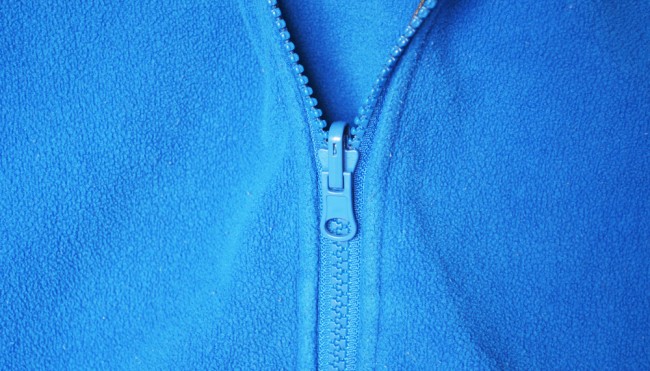
It’s assumed that up to 2,000 synthetic fibers are released from fleece clothing and rinsed into the drainage system per wash cycle. Because the particles are often less than five millimeters in size, wastewater treatment plants can’t filter them out.
That’s why, sooner or later, they make it into the marine environment. Back in 2011, ecologists from Dublin examined 18 beaches on six continents, and synthetic materials like fleece were found on every shore.
Fleece is becoming a part of the food chain
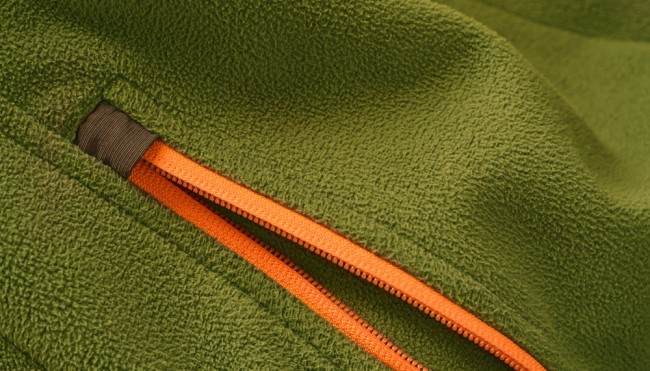
Also alarming, is the fact that this plastic lint can make its way into our food chain through fish and other small animals. It’s still unclear what consequences the microbeads from fleece and other materials have on sea creatures.
If humans consume plastic by eating an organism that has itself consumed these particles, it can cause trouble for us as well. Because consuming plastic releases substances such as bisphenol A, phthalates, and fireproofing agents that can have long-term influences on our genetic makeup and hormonal balance.
There’s also the danger of such components having absorbed environmental toxins during their journey through the wastewater, which could also cause long-term damage to our health. However, there is yet to be any scientific proof of illnesses caused by the particles.
From the PET bottle to jacket
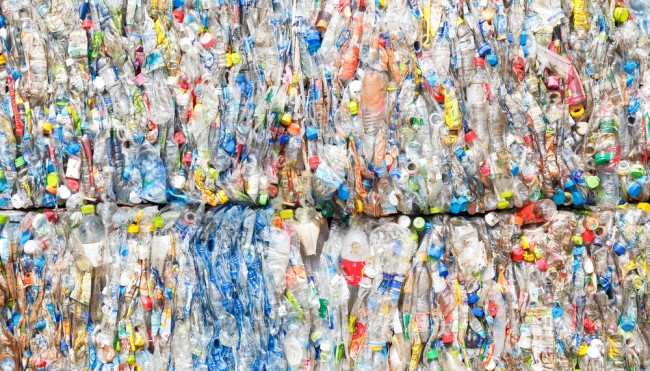
Aside from the pollutive dust, there’s also a second reason to avoid clothes made of polyester: the base material for velour is manufactured from used PET bottles. Of course, recycling is usually a good thing.
The problem is that supermarket chains sell their empty packaging to China. Most of the world’s factories that produce and further process polyester textile fibers, for relatively little money, are located in the Peoples Republic. This is why entire mountains of plastic containers - in 2006 it was close to 100 billion - are shipped to Asia.
Melting down these bottles creates the raw material required to produce the synthetic fibers. This way, the producers no longer need to draw on other resources like petroleum. But the energy costs for production, as well as the horrendous transport routes, have a very negative effect on fleece clothing’s eco-balance.
![[final] Nachhaltige Weihnachtszeit 90](/news/bilder/final-Nachhaltige-Weihnachtszeit-90-250x110-6-442308.jpeg)
![[final] Kerzen 90](/news/bilder/final-Kerzen-90-250x110-6-440357.jpeg)
![[final] Öko-Test Colorwaschmittel 90](/news/bilder/final-Oeko-Test-Colorwaschmittel-90-250x110-6-432303.jpeg)
![[final] Headerbild](/news/bilder/final-Headerbild-400x176-5-443302.jpeg)
![[final] Biofach 2024](/news/bilder/final-Biofach-2024-400x176-5-447302.jpeg)
![[final] Öko-Test Feste Duschen](/news/bilder/final-Oeko-Test-Feste-Duschen-400x176-5-446308.jpeg)
![[final] Kinderkosmetik](/news/bilder/final-Kinderkosmetik-400x176-5-446302.jpeg)
![[final] Öko-Test Orangensaft 100](/news/bilder/final-Oeko-Test-Orangensaft-100-400x176-5-445302.jpeg)


![[final] Biofach 2024](/news/bilder/final-Biofach-2024-120x68-3-447302.jpeg)
![[final] Öko-Test Feste Duschen](/news/bilder/final-Oeko-Test-Feste-Duschen-120x68-3-446308.jpeg)
![[final] Kinderkosmetik](/news/bilder/final-Kinderkosmetik-120x68-3-446302.jpeg)
![[final] Öko-Test Orangensaft 100](/news/bilder/final-Oeko-Test-Orangensaft-100-120x68-3-445302.jpeg)
![[final] Grünes Peeling](/news/bilder/final-Gruenes-Peeling-120x68-3-442319.jpeg)