



 En
EnCodeCheck’s Database is constantly growing - Our data
12. Dec 2019
von
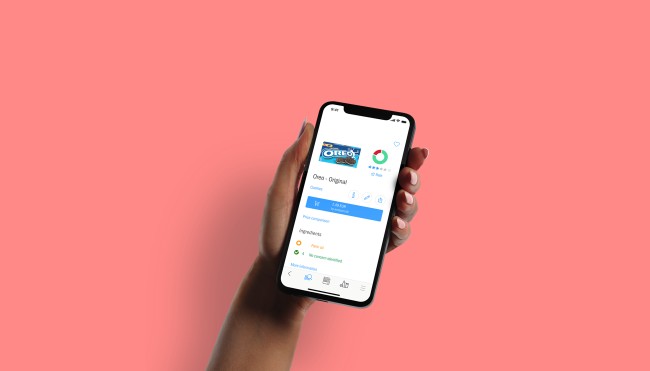
The CodeCheck app is built to help you make healthy and sustainable shopping decisions. A personal shopping assistant for your pocket if you will.
Biggest Product Database in the german-speaking area
In Germany, Switzerland, and Austria CodeCheck already enjoys enormous popularity, with millions of people scanning the barcode of foods and cosmetics, and getting displayed a related rating circle and product recommendations. Those results are not only based on the latest scientific research and individual settings. They rely on a massive product database we have been developing for years. So why don’t you get the results you were looking for after scanning a product every now and then you may wonder? The answer is that building a database in UK has just begun. And you are part of it. While on one hand, this is an exciting endeavor, on the other hand, this means you will witness missing products when searching the app.
Your feedback is crucial
The good news: You can support us. If you come across a product that does not appear in our database, take a picture of it (one of its front- and one of its backside) and send it to us within the app – after a scan failed. Alternatively, you can also send the infos via mail to [email protected]. We will add the data as quickly as possible. With your help, we can grow our database and together build a world, where people can easily find products that benefit their health and nurture the future of our planet. Thank you.
![[final] Headerbild](/news/bilder/final-Headerbild-250x110-6-443302.jpeg)
![[final] Nachhaltige Weihnachtszeit 90](/news/bilder/final-Nachhaltige-Weihnachtszeit-90-250x110-6-442308.jpeg)
![[final] Kerzen 90](/news/bilder/final-Kerzen-90-250x110-6-440357.jpeg)
![[final] Biofach 2024](/news/bilder/final-Biofach-2024-400x176-5-447302.jpeg)
![[final] Öko-Test Feste Duschen](/news/bilder/final-Oeko-Test-Feste-Duschen-400x176-5-446308.jpeg)
![[final] Kinderkosmetik](/news/bilder/final-Kinderkosmetik-400x176-5-446302.jpeg)
![[final] Öko-Test Orangensaft 100](/news/bilder/final-Oeko-Test-Orangensaft-100-400x176-5-445302.jpeg)
![[final] Grünes Peeling](/news/bilder/final-Gruenes-Peeling-400x176-5-442319.jpeg)


![[final] Biofach 2024](/news/bilder/final-Biofach-2024-120x68-3-447302.jpeg)
![[final] Öko-Test Feste Duschen](/news/bilder/final-Oeko-Test-Feste-Duschen-120x68-3-446308.jpeg)
![[final] Kinderkosmetik](/news/bilder/final-Kinderkosmetik-120x68-3-446302.jpeg)
![[final] Öko-Test Orangensaft 100](/news/bilder/final-Oeko-Test-Orangensaft-100-120x68-3-445302.jpeg)
![[final] Grünes Peeling](/news/bilder/final-Gruenes-Peeling-120x68-3-442319.jpeg)